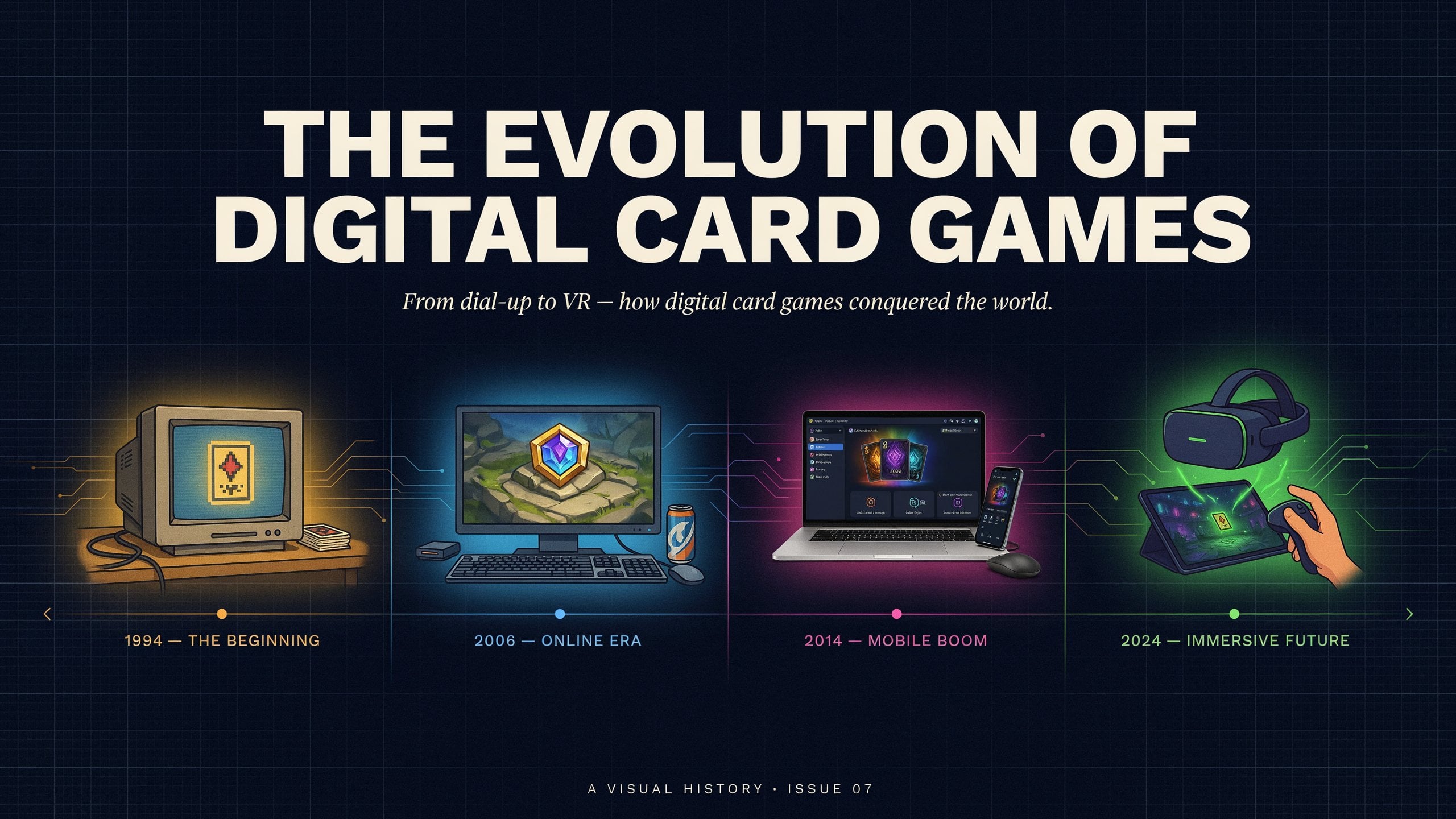
A long time before a single pixel lit up a screen, card games were already hard at work doing what they do best, which is bringing people together. Historians have traced the earliest playing cards back to Tang Dynasty China, where paper decks doubled as both entertainment and currency. By the fourteenth century, cards had reached Europe, where regional variations of poker, rummy, and bridge took shape and became household staples. That centuries-long journey from hand-painted pasteboard to kitchen-table tradition, passed down through generations, set the stage for the move into the digital world.
From Home Computers To The First Digital Decks
The first digital card games arrived alongside home computers in the 1980s and 1990s, when simple solitaire and blackjack programs introduced players to a version of the game that required no shuffling, dealer, or other human layers. These early titles were very basic by today’s standards, limited by processing power and dial-up connections, but they proved something more important: people were ready to play without a physical deck in hand.
Real Money Brought Real Stakes
That readiness accelerated once online casinos and gaming sites began to appear in the mid-90s, bringing real-money card gaming to a global audience for the first time. With actual stakes involved, trust quickly became the biggest challenge. Encryption, licensing, and independently audited random number generators became standard practice, and reputable online casinos worked to prove that a digital deck could be shuffled just as fairly as a physical one. That commitment to verified fairness is a major reason why online card gaming managed to grow into a global phenomenon valued in the billions, with new players taking part every single day.
Smartphones And The Cloud Were Game Changers
Smartphones then came along and reshaped the entire landscape. Touchscreens made tapping and dragging cards feel almost as natural as physically handling them, and suddenly a quick hand of solitaire or a poker tournament fit into a commute or a coffee break. Cloud computing added another layer of convenience, letting players start a session on one device and pick it up on another without losing any progress. Card games no longer lived on a single device; they lived with the player.
Artificial Intelligence Behind The Scenes
Artificial intelligence has since taken on a quieter but equally important role. Behind the scenes, AI systems match players of similar skill levels, flag suspicious behaviours and adjust difficulty levels so games stay challenging without becoming too frustrating. Some platforms use it to power increasingly sophisticated computer opponents, capable of adapting their strategy mid-game in ways that once seemed impossible outside of a human mind. For many players, this quiet layer of intelligence is what makes casual games feel more personal and less generic.
What’s Next?
Looking ahead, virtual and augmented reality point to an even more immersive future, one where poker tables could be shared virtually with players from all around the world. Making card games appear and sound just like they would at a real-life casino is the ultimate aim, and the added convenience means players could enjoy their favourite games from wherever they happen to be, which is a huge plus.
Conclusion
From Tang Dynasty paper decks to AI-matched mobile tournaments, digital card games have come a long way and continued to evolve without losing their appeal. Each tech wave, from dial-up internet to cloud saving, has simply given players new ways to enjoy an old pastime.