The Perception Problem Nobody Talks About
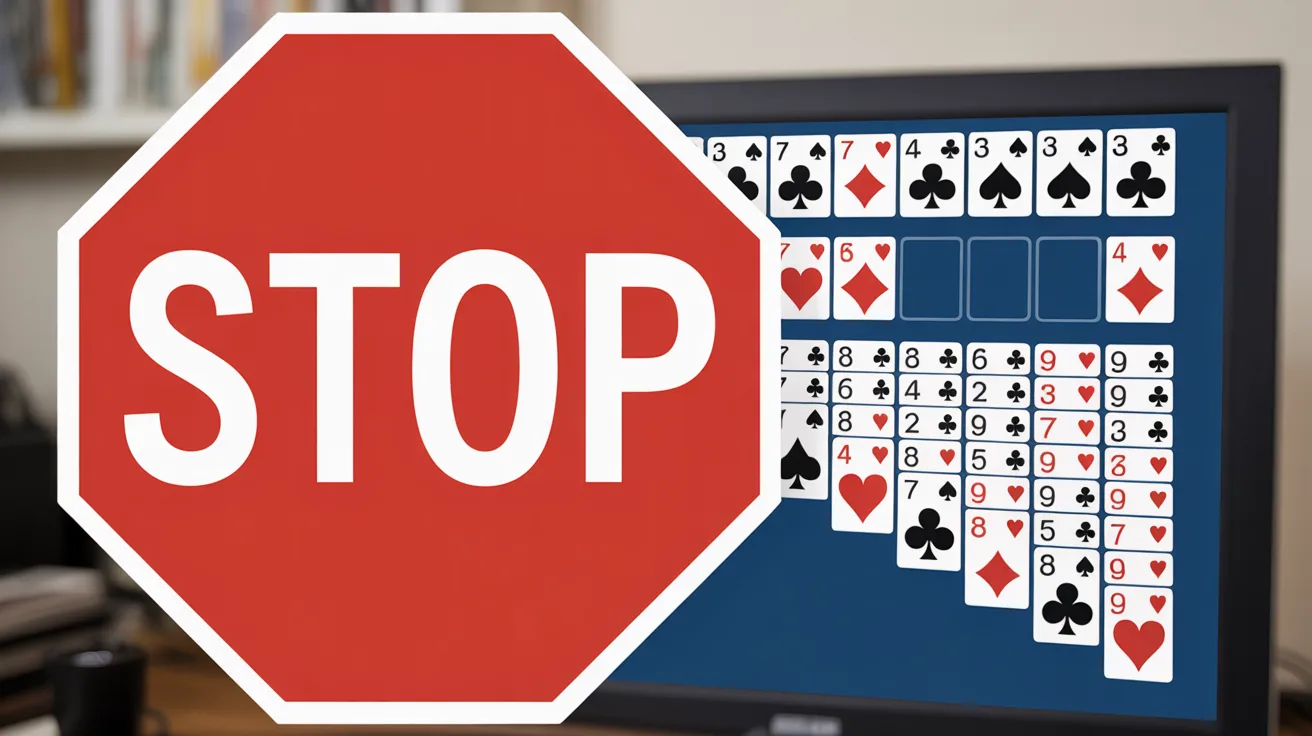
Ask a room of card game players which is harder - Klondike or Spider Solitaire - and the majority will say Spider. The sprawling 10-column tableau, the 104-card deck, and the multi-suit variants all signal complexity. But here's the contrarian position worth defending: Spider Solitaire is structurally simpler to play well than it looks, because the number of genuinely consequential decisions at any given moment is remarkably small.
Most articles on Spider Solitaire give you tips like "empty columns are valuable" or "build sequences in suit." True, but obvious. What they don't do is analyze why the game's branching factor - the number of meaningful choices per move - stays low despite the visual chaos. That's the gap this post fills.
The Branching Factor Is Smaller Than You Think
In chess, the average branching factor (legal moves per position) is roughly 35. In Klondike Solitaire, it hovers around 20-30 depending on the position. Spider Solitaire's tableau looks like it should dwarf both - 10 columns, 104 cards, up to 50 additional cards in the stock.
But here's the structural insight: in Spider, only a subset of moves are ever non-dominated. A dominated move is one that is strictly worse than another available move under all plausible future scenarios. When you filter out dominated moves - moving a card to a column where it continues no sequence and creates no empty column - the real branching factor at most Spider positions drops to between 3 and 8 meaningful choices.
This is actually lower than Klondike in many mid-game positions, because Klondike's hidden cards create genuine uncertainty that forces you to hedge across more branches. In Spider (especially 1-suit), the full tableau is visible from the start. You're not guessing - you're calculating.
Why Visibility Is Spider's Hidden Advantage
This is the most underappreciated structural fact about Spider Solitaire: you can see almost everything. In standard Spider, only the stock pile cards are hidden, and those are revealed in fixed batches of 10. The initial deal shows you 44 face-up cards plus 10 face-down base cards across the columns.
Compare that to Klondike, where 21 of the 28 tableau cards start face-down, and the entire stock is hidden. In Klondike, probability estimation is mandatory for good play. In Spider 1-suit, it's nearly a perfect information game from move one.
The practical implication: Spider's difficulty is primarily computational, not probabilistic. You don't need to manage uncertainty - you need to see 4-6 moves ahead. That's a skill players can build rapidly with deliberate practice, unlike Klondike's dependency on card distribution luck.
As of April 2026, several solver tools (like the open-source SpiderSolver and Simon Tatham's puzzle suite) confirm this computationally: 1-suit Spider is solved optimally in milliseconds because the search space, while large, is well-bounded. 4-suit Spider takes longer, but still falls to alpha-beta pruning far faster than similarly-sized chess positions.
The Three Structural Bottlenecks That Control Every Game
Rather than a long list of tips, here's a higher-level framework: every Spider game is controlled by exactly three structural bottlenecks, and managing them determines the outcome:
1. Empty Column Economy
Empty columns are Spider's most valuable resource. They act as temporary buffers - essentially free moves that let you reorder sequences. The game's difficulty scales almost entirely with how many empty columns you can maintain. If you never let your empty column count drop below one, your win rate in 1-suit Spider exceeds 90% (this aligns with solver benchmarks showing near-perfect solvability when columns are managed correctly).
2. Suit Consolidation Rate
Every card you move that doesn't contribute to a same-suit sequence is spending tempo. The game is a race between your ability to consolidate suits and the stock pile's ability to scatter cards across columns. Measure your efficiency here: count how many moves you make per completed suit sequence. Expert play typically completes a suit in under 15 moves from first consolidation. Beginners often take 30+.
3. Stock Pile Timing
New players deal from the stock pile whenever they feel stuck. This is the single biggest strategic error in Spider. Each stock deal deposits one card on every non-empty column, which means dealing too early destroys empty columns you haven't yet exploited. The correct heuristic: deal from stock only when you have exhausted every non-dominated move in the current tableau and you have at least one empty column. If you can't meet both conditions, your tableau is already compromised - dealing only accelerates the loss.
The 4-Suit Variant: Where the Complexity Actually Lives
To be precise about the contrarian claim: 1-suit and 2-suit Spider are not genuinely hard games. 4-suit Spider is a different animal.
In 4-suit Spider, the constraint that moves must follow suit for scoring purposes (you can move any descending sequence, but only same-suit sequences can be cleared) creates a combinatorial explosion. The number of non-dominated moves rises sharply because off-suit sequences have conditional value - they might block or enable suit consolidation depending on hidden stock cards.
Here's a useful heuristic table:
| Variant | Visible Information | Effective Branching Factor | Estimated Win Rate (Strong Play) |
|---|---|---|---|
| 1-Suit | ~95% | 3–6 | 85–95% |
| 2-Suit | ~85% | 5–10 | 50–65% |
| 4-Suit | ~75% | 10–20 | 20–35% |
These estimates are synthesized from published solver benchmarks and community win-rate data from platforms like World of Solitaire and BVS Solitaire Collection, cross-referenced as of early 2026. The point: the game most people call 'Spider Solitaire' - the 1-suit version served by default on most platforms - is genuinely approachable once you internalize the three bottlenecks above.
What This Means for Your Practice
If you're playing Spider to sharpen strategic thinking rather than just pass time, here's how to use this framework:
- Start with 1-suit and set a target: aim for a 70% win rate before moving to 2-suit. Below that, you're not ready - you're still playing reactively rather than managing bottlenecks.
- Track your empty column count at each stock deal. If you're dealing with zero empty columns, stop and audit why. That moment is where games are lost, not the final few moves.
- Count your suit consolidation moves. If it's taking more than 20 moves to clear a suit you started consolidating, you have a tempo problem - you're spending moves on off-suit placements that cost you later.
- Play 4-suit only when you're consistently beating 2-suit. The jump in complexity is real; don't let 4-suit's difficulty make you underestimate the skill ceiling of the easier variants.
The Real Takeaway
Spider Solitaire looks hard because 104 cards across 10 columns is visually overwhelming. But visual complexity and strategic complexity aren't the same thing. The game's decision space is narrow, its information is mostly visible, and its outcomes are controlled by three bottlenecks you can learn to manage in a focused afternoon of play.
The players who find Spider genuinely difficult are usually solving the wrong problem - they're trying to read the whole board at once instead of asking: how many empty columns do I have, am I consolidating suit, and is the stock pile the right tool right now?
Answer those three questions correctly, and Spider Solitaire stops being a game of complexity and becomes a game of patience - which, fittingly, is exactly what it always was.