

Impossible de déposer, votre carte doit être de la couleur opposée
Cannot drop, your card needs to be one rank lower
Cannot move multiple cards to foundation
Card suit doesn't match foundation pile suit
Card can only be dropped on top of a card pile
Cannot deal cards when there are empty tableau piles
You can only move {0} card(s) at a time based on the current free cells and tableau
The cards don't add up to 13 and cannot be moved
The card is inaccessible and move cannot be performed
Cards must be in sequential order (one higher or lower)




















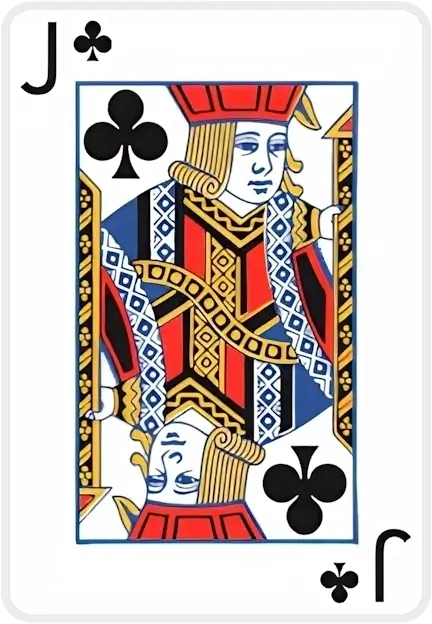
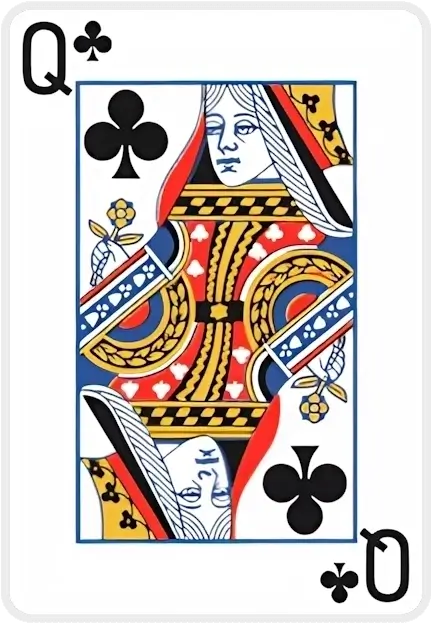
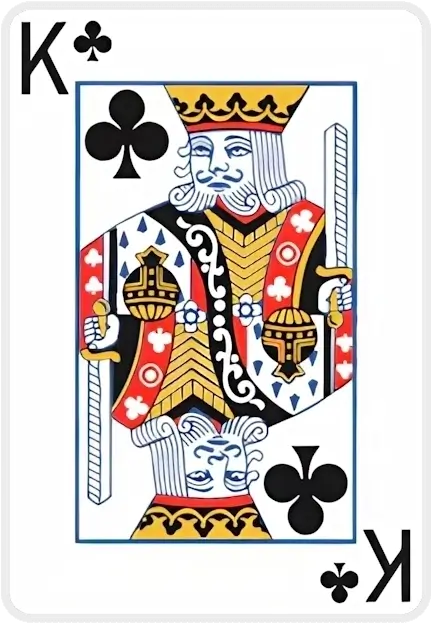


Penguin Solitaire



Play Penguin Solitaire Free Online – 99% Winnable FreeCell Card Game
Penguin Solitaire is a strategic FreeCell-family patience game that you can win nearly every time—now playable free and full-screen on solitairex.io. Invented by British games scholar David Parlett while he was writing The Penguin Book of Patience, the layout features a unique “beak” card, seven “flipper” cells, and a win-rate of about 99.9 %, making it one of the most rewarding solo card puzzles on the web.
Game Overview
- Family & difficulty: Member of the FreeCell group—perfect-information games where every card is dealt face-up; skilful play, not luck, decides the outcome.
- Deck & deal: One 52-card deck is dealt into seven columns of seven cards; the first card dealt becomes the beak and its three mates leap straight to the foundations.
- Foundations: Built up in suit, wrapping King→Ace, starting from the beak’s rank.
- Tableau: Built down in suit, also circular; complete in-suit runs move as a single block, with no free-cell count limit.
- Flipper cells: Seven single-card reserves give flexibility but punish careless parking.
- Empty-column rule: Only a card (or run) one rank below the beak may start a vacant column—mastering this rule is the key to fast clears.
How to Play Penguin Solitaire Online
- Free the beak early. Clearing the leftmost column unlocks the fourth foundation and speeds up the rest of the build.
- Keep flipper cells transient. Always plan how you’ll empty a cell before you fill it; seven slots evaporate fast.
- Create at least one empty column. A vacant pile functions like a super-cell for whole suit sequences that begin one rank below the beak.
- Move full runs whenever possible. Because runs ignore cell limits, sliding a long suit sequence can unblock multiple cards in one stroke.
- Finish foundations aggressively. Unlike Klondike, there’s no penalty for building early—send cards home the moment they’re free.
History & Origins
- Created by David Parlett (b. 1939). Parlett is an award-winning designer (Hare & Tortoise) and historian of card games; Penguin is one of several original solitaires he published in the late 1970s.
- Named for The Penguin Book of Patience—Parlett wrote the rules while compiling that landmark 1980 compendium.
- Solver statistics. A 50-million-deal computer analysis estimates only 1 in 1 667 deals is unwinnable (≈ 99.94 % success), slightly tougher than classic FreeCell yet easier than Eight Off.
Why Play on SolitaireX?
- Instant play, no downloads—just open the game and start planning your sequence.
- Mobile-first design—smooth on phones, tablets, and desktops.
- More FreeCell challenges: After you conquer Penguin, explore dozens of other FreeCell variants in our FreeCell collection.
- Try the classic: Prefer the original four-cell puzzle? Jump straight to FreeCell Classic—also 100 % free and solvable.
Case Studies
All figures below come directly from our database. Using first-party data ensures every insight is evidence-based, up-to-date, and privacy-respectful.
| Game Tier | Stand-out Titles | Win Rate |
|---|---|---|
| Quick Wins | Spider (1 Suit), Hole-in-One, TriPeaks | 70–84% |
| Fair Challenges | Solitaire (Draw 1) – 913 k plays FreeCell, Golf |
45–63% |
| Expert-Level | Spider (4 Suits), Forty Thieves, Double Scorpion | ≤11% |
Curious which moves turn the odds in your favor? Explore all the data & strategies →
What people say about us
Interview with Beverley Walker-Daury
At 87, Beverley Walker-Daury shares how SolitaireX brings joy, companionship, and purpose to her days in a retirement home.
Player Interview: Poul Andersen
Poul Andersen shares how playing SolitaireX helps him keep his brain sharp and active.
Player Interview: Peter Gross
Peter Gross, 81, shares how SolitaireX became his go-to place for relaxing Freecell games and friendly competition.
Player Spotlight: St0Sh0’s Record-Breaking Runs on SolitaireX
We sit down with speed-solitaire sensation St0Sh0 to talk record times, favorite variants, and why SolitaireX is his go-to card-game hub.
Fresh from the SolitaireX Blog

Why Poker Mini Games Often Become More Addictive Than the Main Story
The standard account of a mini game is that it exists to break up the main quest, a rest stop between missions. That account fails the moment anyone looks at what players actually do with these modes. They stop advancing the plot and stay at the table for three hours. Studios have shipped card modes that outsold the campaigns they were built to decorate, and at least one developer has removed the campaign entirely and still sold millions. The pull here is structural. It comes from the way a hand of cards is built.
Beyond Curiosity: How to Use the SolitaireX.io Odds Calculator as a Legitimate Training Tool
Most players treat odds calculators as novelties. We show you how to weaponize win probability data to calibrate your play, distinguish luck from skill, and identify whether losses stem from unwinnable deals or tactical mistakes.
Triple Solitaire Turn 3 Mastery: The Three-Pile Scanning Protocol That Changes Everything
Most Triple Solitaire Turn 3 players on solitairex.io miss the core mechanic: three simultaneous waste piles create information asymmetry that separates wins from losses. This guide reveals the exact scanning protocol, cycle-burning tactics, and locked-state detection method that competitive players use.
Triple Solitaire Turn 3 Win Rates: Where Skill Becomes Irrelevant (Data from solitairex.io)
Using solitairex.io's Odds Calculator, we analyze Triple Solitaire's actual winnability across three decks and 12 foundation piles. The data reveals a stark threshold where variance dominates skill—and which players should actually be playing this variant.
Latest guides crafted by Stoyan Shopov and Kalin Nikolov
Golf Solitaire Mastery: Strategy, Stats & Flow
Deal 7 columns of 5 face‑up cards (35 total). The remaining 17 cards*form the stock; flip the first stock card to start the waste. You may move only exposed tableau cards, and only if the rank is exactly one higher or lower than the waste top. Suits don’t matter. When no move exists, flip a new waste card. Clear all tableau cards to win.
TriPeaks Solitaire Mastery: Strategy & Analytics
Two peaks are dust; one stubborn ridge remains. Your waste shows a 9. The tableau flashes 10‑J‑10‑9‑8 like a heartbeat. You nudge the 10, feel the cadence lock in, and—without overthinking—trace a neat descent that crumbles the last peak. That tiny spark of *flow* is why TriPeaks hooks serious players: rhythm, restraint, and the rush of a run that arrives exactly on time.
Pyramid Solitaire Mastery: Strategy, Stats & Joy
Picture the pyramid down to its last stubborn tier: a Queen pinned beneath a ridge, a lone Ace on the waste, and a King begging to be burned for tempo. Heartbeat, breath, click—then the whole structure yields in a rush. If you’ve hit that razor‑edge finale, you already know Pyramid’s secret: small decisions, made in the right order, change everything.
FreeCell Solitaire Mastery: Strategy & Analytics Guide
I have a 15 years personal, lived experience—picture a scene built from thousands of session logs and notes from serious players: It’s late, and the board looks jammed. You clear a single column, free one cell, and suddenly a 9♣‑8♦‑7♣‑6♦ chain glides into place, untying the knot you stared at for ten minutes. The rush isn’t luck—it’s the quiet pleasure of a plan snapping into focus. When did FreeCell last feel less like “killing time” and more like practicing a craft you can actually master?
Media About Us
ourculturemag.com
Top 5 Games to Keep You Busy When You’re Bored
Wikipedia

Citation in Wikipedia page for data driven insights about solitaire.
Research: What Tech Do Senior Solitaire Players Use? A Data‑Rich Look
hashnode.dev
How SolitaireX.io Powers Seeded Deals and Replays Across 70 Solitaire Variations
1832565376064812